Case Study
Rowse Honey
The challenge
Using evidence to improve product understanding
At evensix, I used analytics, behavioural evidence and customer feedback to identify improvements to Rowse Honey’s website. This included reviewing GA4 and Hotjar findings and reshaping Looker Studio reporting for stakeholders.
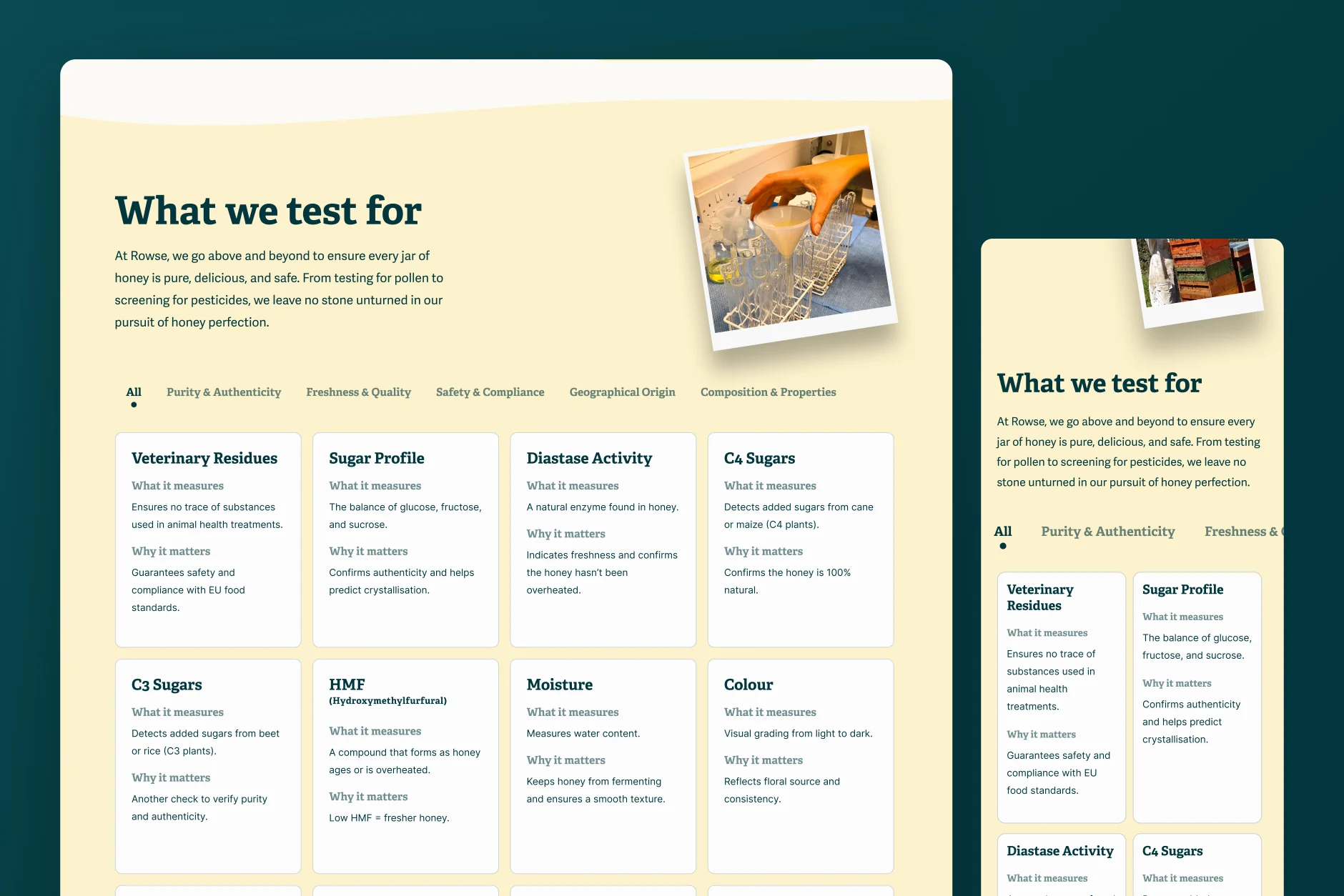
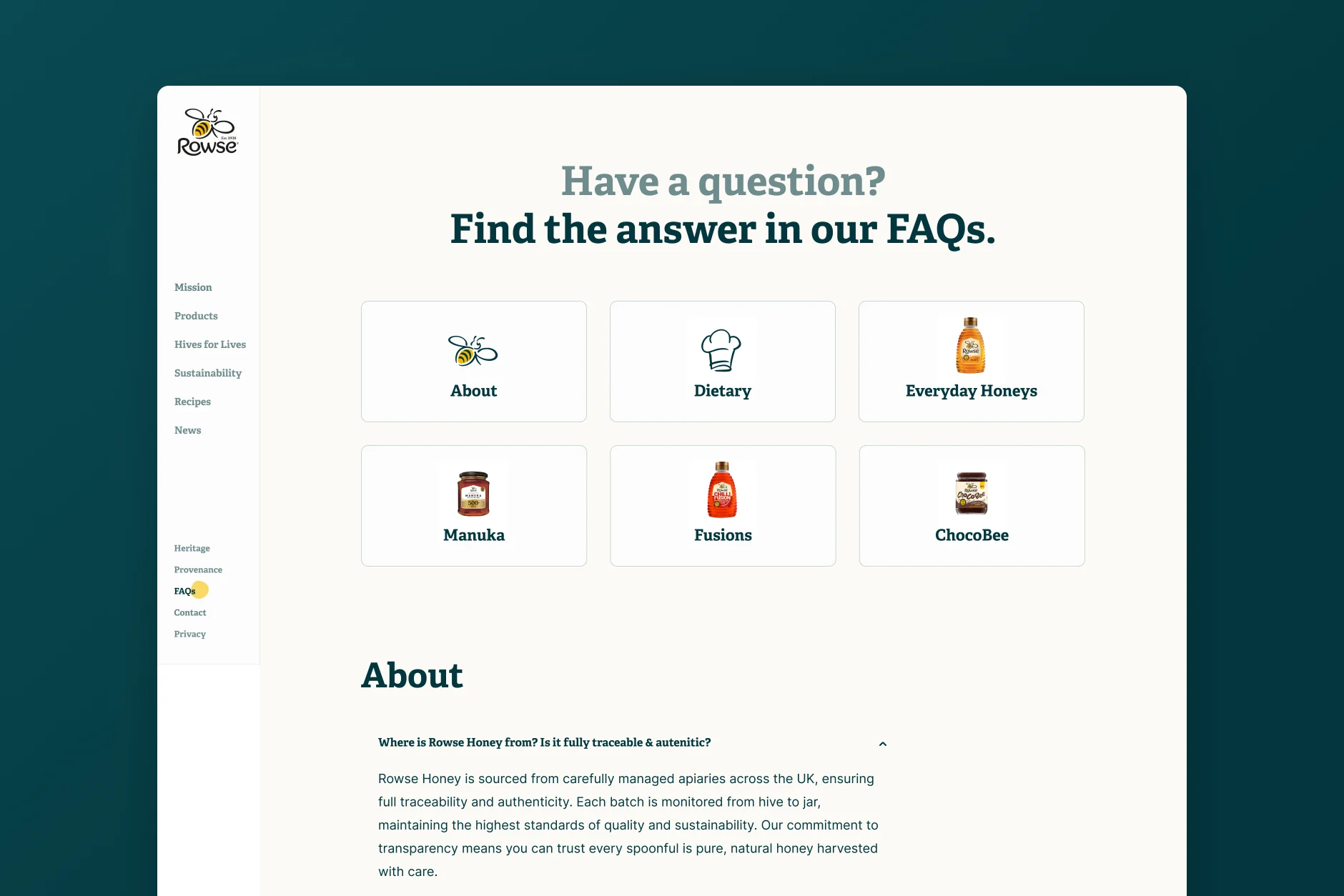
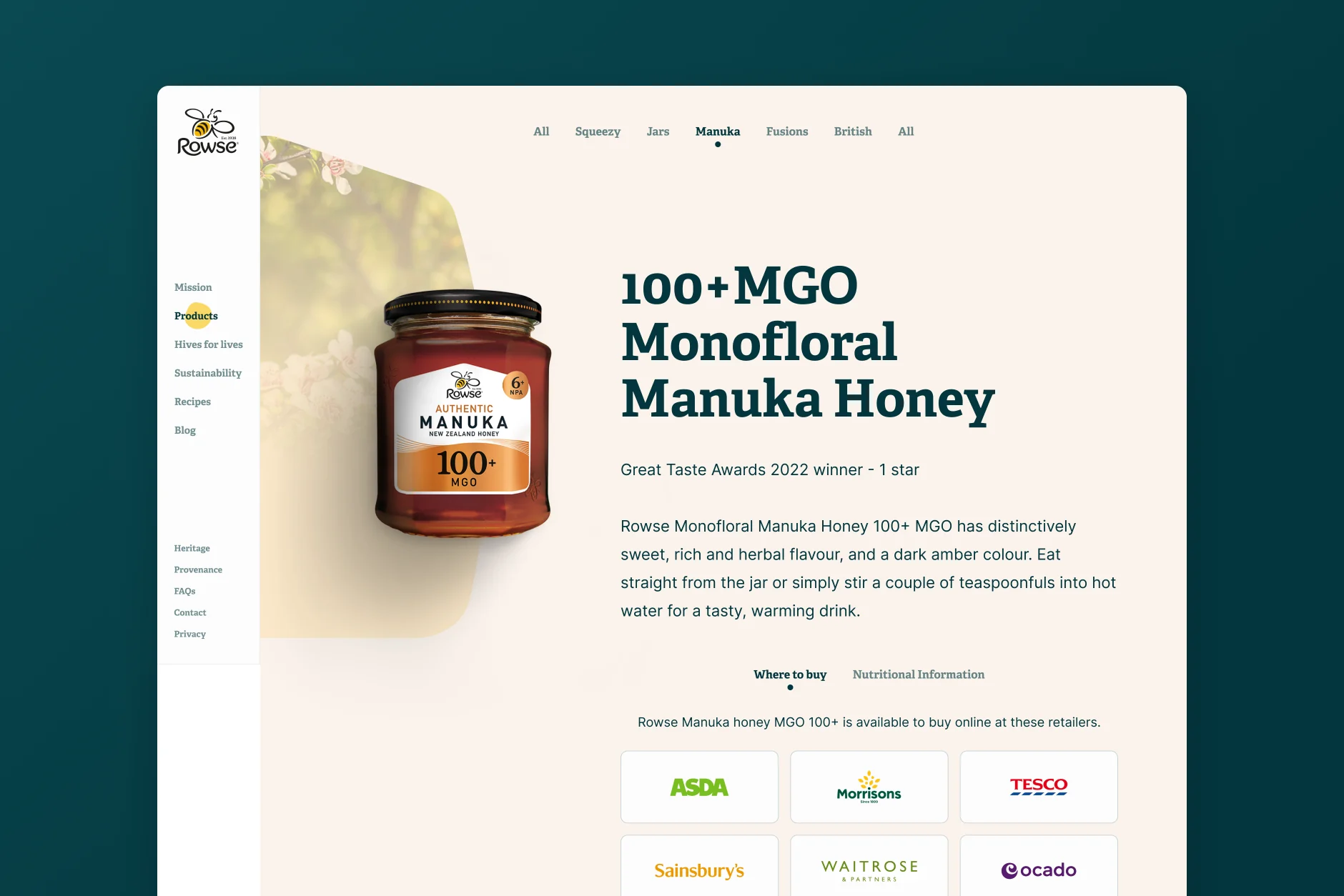
The work informed recurring design updates to product content, imagery and allergy information. Questions about purity, origin and authenticity also shaped a provenance experience explaining sourcing, traceability, testing and quality controls. The emphasis was on answering specific customer concerns through clearer content and reusable components.
Authenticity
Answering the authenticity question
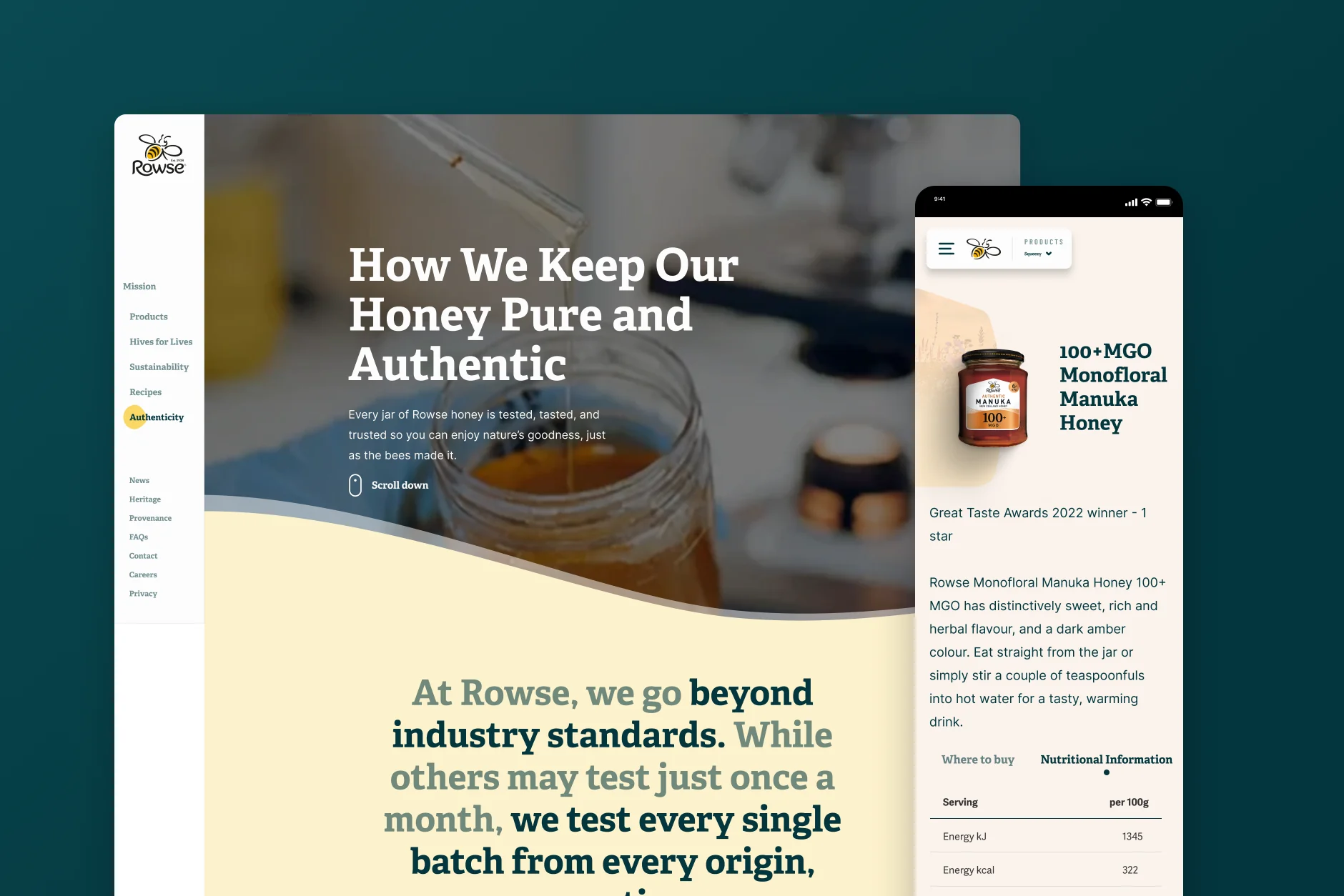
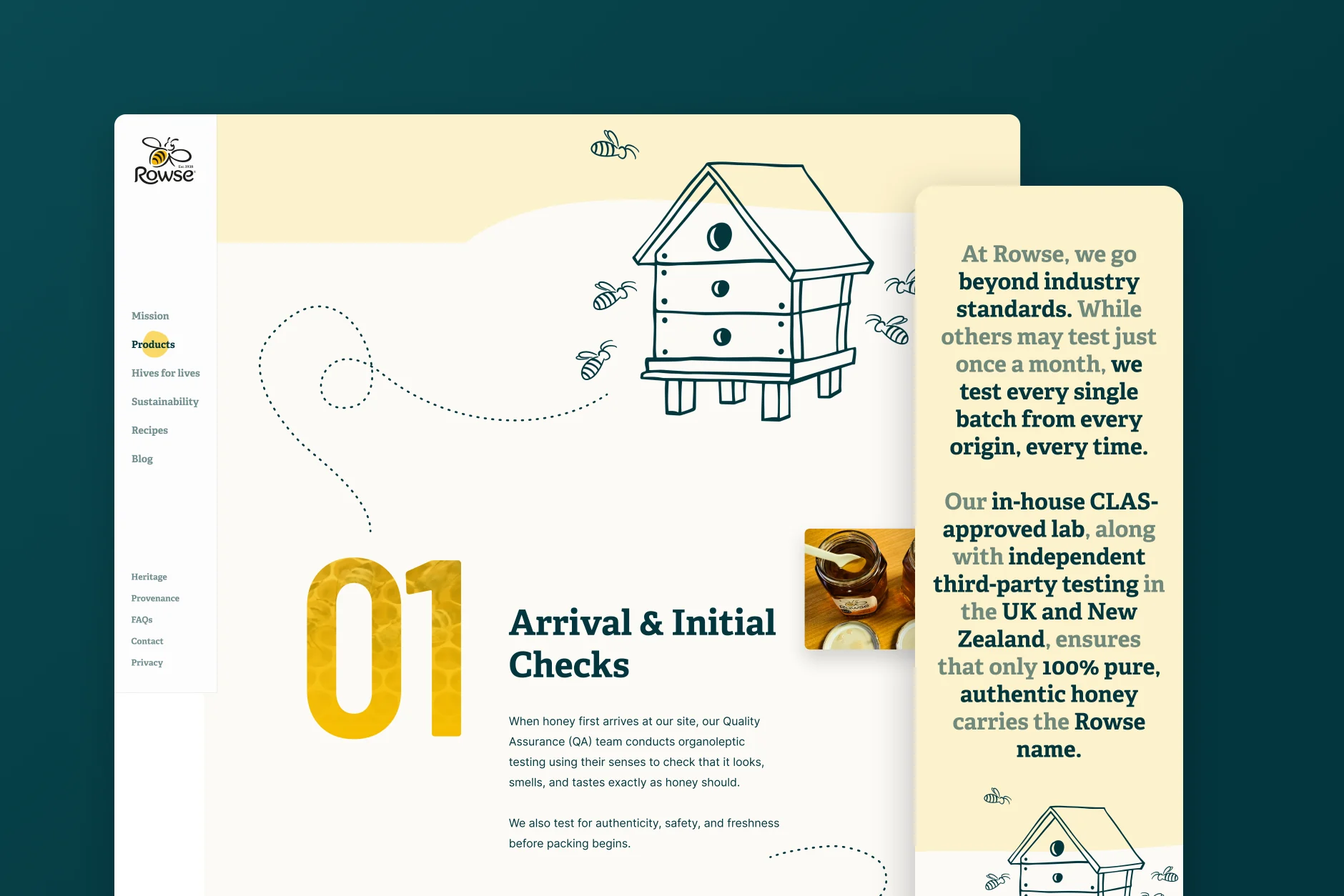
Rowse had faced scrutiny about the provenance of its honey: was it authentic, was it the real deal? The brief was to rapidly prototype a landing page that used the structured data in Sanity to answer those concerns directly.
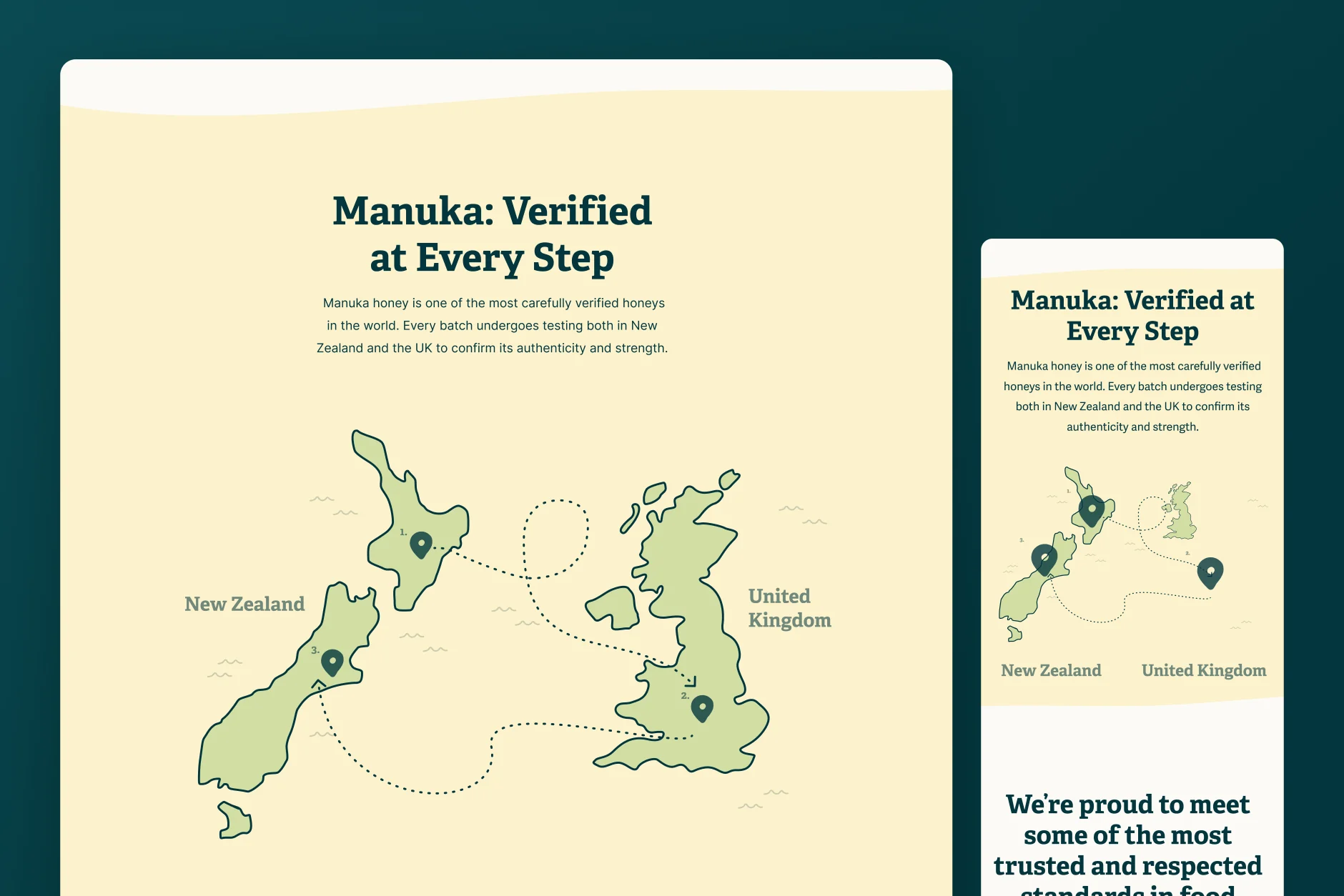
Rowse backs its claims with science, so the page walks people through how every batch is tested, then supports that with the scientific markers that prove authenticity and a map tracing Manuka honey from New Zealand to the UK.